How to Prevent Ice Damage to Trees in NC (2026)
Ice and heavy snow damage trees by adding weight to branches, bending weak limbs, splitting branch unions, and sometimes uprooting shallow-rooted trees. In Western North Carolina, homeowners can reduce this risk by identifying vulnerable trees, scheduling preventive pruning or cabling, and responding safely after storms in Asheville, Waynesville, and Marshall.
Why do ice and heavy snow damage trees?
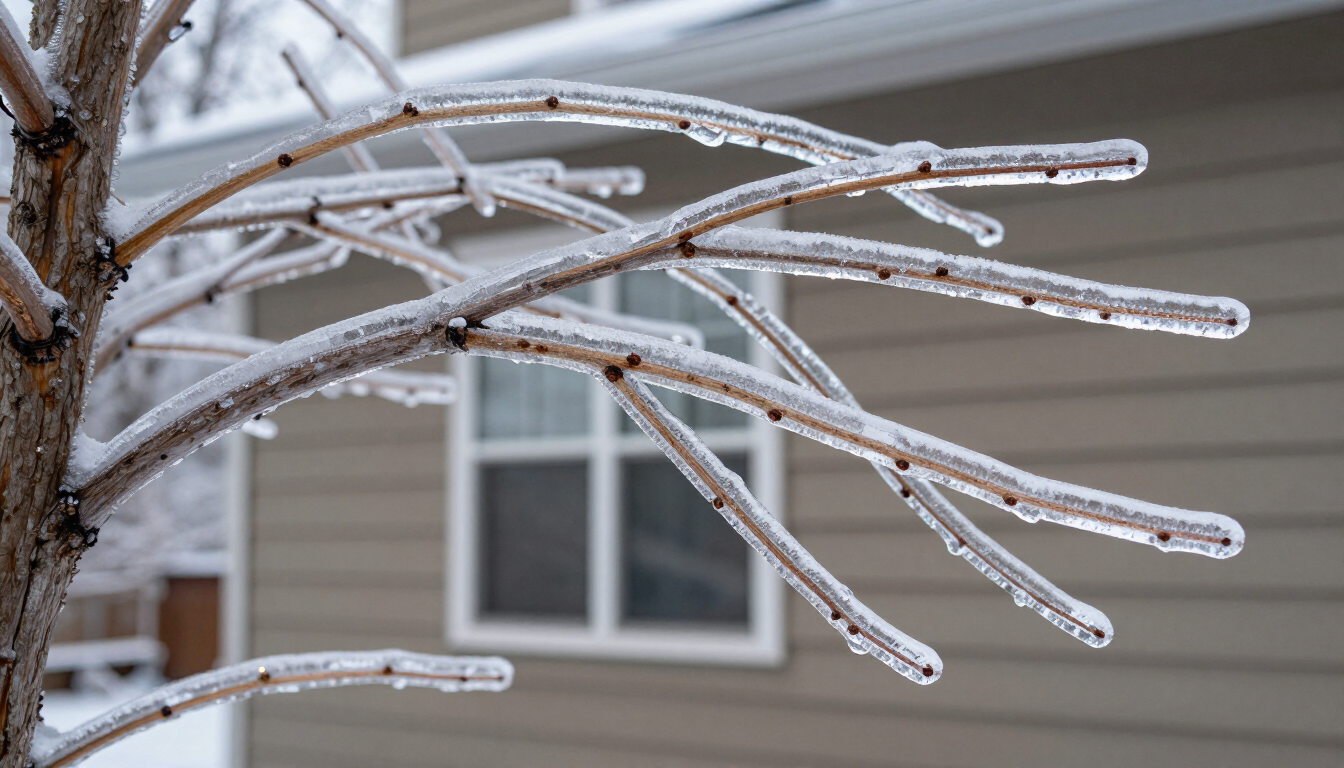
Ice is especially dangerous because it forms a dense coating on branches. Even a thin layer can add substantial weight across an entire crown. Wet, heavy snow creates a similar load, particularly when it collects on broad evergreen branches or already snow-covered limbs.
Storm damage becomes more likely when branches are:
- Long, overextended, or poorly attached
- Split, cracked, dead, or decayed
- Growing from weak branch unions
- Covered with dense foliage or vines
- Positioned over roofs, driveways, vehicles, or utility lines
Freezing temperatures can also make wood brittle. When wind pushes an ice-loaded crown, the combined force may cause limbs to break suddenly. A tree that looks healthy from the ground can still have hidden decay, included bark, or structural defects.
Which trees are most at risk in Western North Carolina?
Risk depends on species, structure, location, health, and recent weather. Large trees near homes deserve particular attention because even one failed limb can cause expensive damage or injury.
Commonly vulnerable trees include:
- Multi-stemmed trees: Several trunks may compete for space and develop weak unions.
- Trees with co-dominant leaders: Two main stems can split under uneven weight or wind.
- Evergreens: Dense needles and foliage catch snow and ice, increasing load.
- Trees with decay: Internal cavities and weakened wood may not be visible until failure.
- Overextended hardwood limbs: Long horizontal branches can break when heavily loaded.
- Recently disturbed trees: Construction, grading, trenching, or root damage can reduce stability.
Older trees are not automatically unsafe, but their structure should be evaluated regularly. Trees growing on slopes, in saturated soil, or near exposed ridges may also face greater failure risk during winter storms.
Homeowners in Asheville , Waynesville , and Marshall should consider both the tree and its potential targets. A stable tree over an open yard presents less concern than a similar tree over a bedroom, power line, or frequently used walkway.
What are the warning signs of weak limbs?
A professional inspection is the safest way to evaluate a large tree, but homeowners can watch for visible warning signs before winter weather arrives. Look from a safe distance and never climb a tree to inspect it.
Warning signs include:
- Cracks extending through branches or trunk unions
- Dead branches, hanging limbs, or loose bark
- Mushrooms or conks growing on the trunk or root flare
- Cavities, hollow areas, or visible decay
- Branches rubbing against one another
- V-shaped unions with included bark
- A noticeable lean that has recently changed
- Soil lifting, exposed roots, or movement at the base
A branch does not need to be completely dead to fail. Cracks, decay, and poor attachment can make a living limb dangerous when loaded with snow or ice. If you notice defects near a structure, arrange a tree risk assessment before the next storm.
How can pruning reduce ice and snow damage?
Preventive pruning improves structure by removing defective, dead, or poorly attached branches before they become storm hazards. Proper pruning can also reduce leverage by shortening selected limbs and improving weight distribution throughout the crown.
Good structural pruning may include:
- Removing dead, broken, or diseased branches
- Reducing or removing competing leaders when appropriate
- Correcting crossing and rubbing branches
- Removing weakly attached sprouts and suckers
- Reducing selected end weight without over-thinning the canopy
- Maintaining clearance from roofs, roads, and utility lines
Timing and technique matter. Heavy topping or indiscriminate removal can create weak regrowth, wounds, and new hazards. A qualified arborist should determine which branches to remove and how much live canopy the tree can safely lose.
Learn more about professional tree pruning and trimming , especially if you have mature trees close to your home. Pruning is a planning measure; it cannot guarantee that a tree will withstand every ice storm.
Can cabling and bracing prevent branch failure?
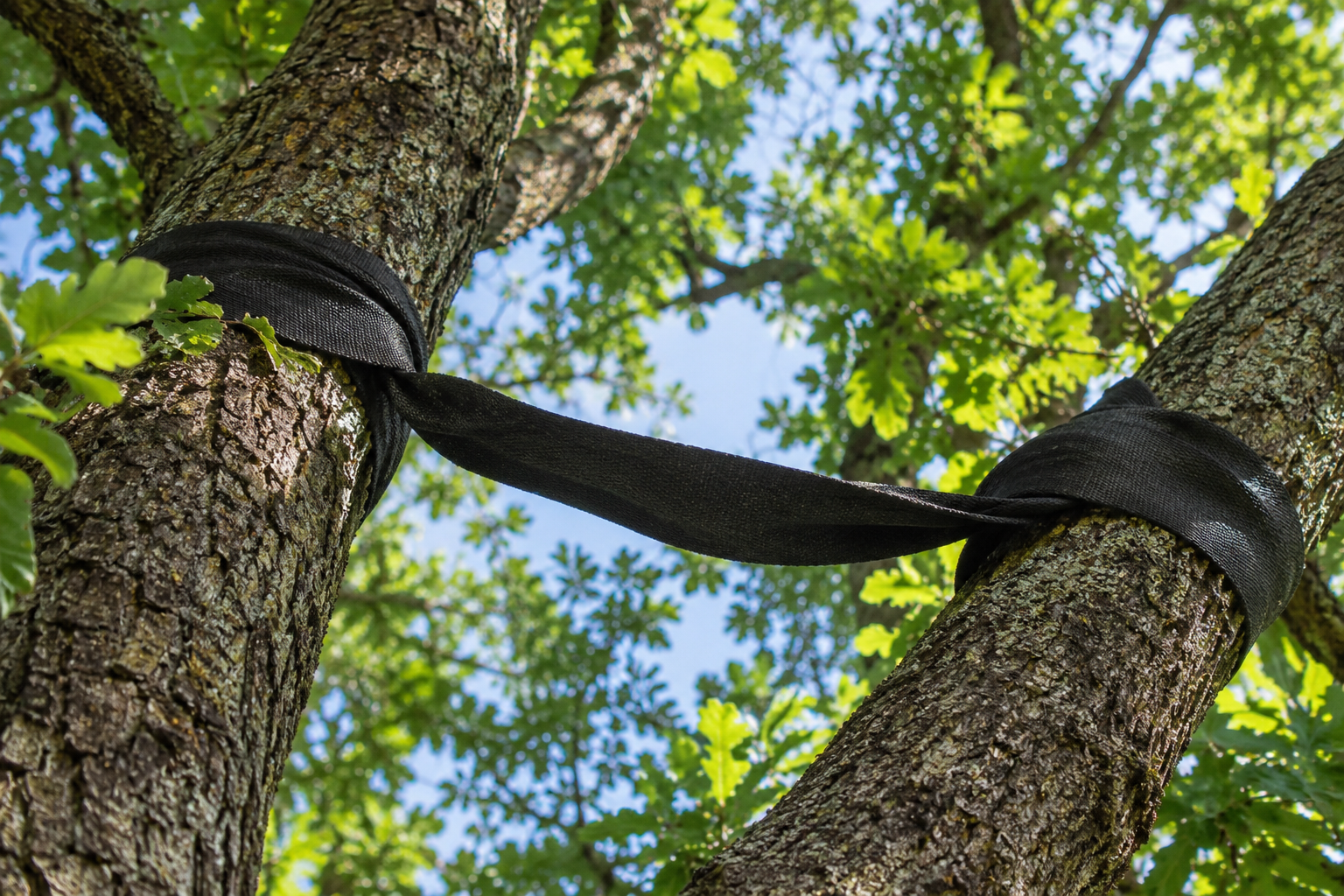
Cabling and bracing can provide supplemental support for selected trees with structural defects. A cable may limit movement between major limbs, while a brace can help reinforce a weak union. These systems are not substitutes for pruning, removal, or correction of a fundamentally unsafe tree.
Cabling may be considered for:
- Two co-dominant stems with a weak union
- Valuable mature trees with manageable defects
- Large limbs that need supplemental support
- Trees where preservation is preferred and risk is acceptable
An arborist must select the correct hardware, attachment points, installation height, and inspection schedule. Improperly installed cables can damage living tissue or create a false sense of security. Explore professional tree cabling and bracing when preservation is a realistic option.
What should homeowners do before a winter storm?
Preparation is most effective when completed before ice or snow is in the forecast. Use this short checklist:
- Walk the property from the ground and identify trees over targets.
- Look for cracks, dead limbs, decay, lean, and weak branch unions.
- Schedule a professional risk assessment for large or questionable trees.
- Complete recommended pruning, removal, or cabling before winter weather.
- Keep vehicles, children, and outdoor equipment away from visibly hazardous limbs.
Do not shake branches, throw objects at ice, or use a ladder during freezing conditions. Removing ice while standing beneath a loaded limb can cause sudden failure. Never attempt work near power lines; contact the utility provider and a qualified professional instead.
What should you do after an ice or snow storm?
Start with safety, not cleanup. Stay away from hanging branches, split trunks, uprooted trees, and downed lines. Assume every fallen or damaged power line is energized, and call 911 for immediate danger or the appropriate utility provider for electrical hazards.
After the area is safe:
- Photograph damage from a safe location for insurance records.
- Keep people and pets away from unstable trees.
- Do not cut large fallen limbs yourself.
- Avoid parking beneath damaged crowns.
- Arrange an inspection before removing damaged parts.
Storm-damaged trees can shift without warning. A partially attached branch may fall hours or days later, especially when temperatures rise, wind returns, or snow melts. Emergency tree services can help prioritize urgent hazards and determine whether a damaged tree can be preserved.
When should a damaged tree be removed?
Removal may be necessary when a tree has severe trunk failure, extensive root damage, major decay, or a high likelihood of hitting a home or another important target. However, not every broken limb means the whole tree must come down.
An arborist can evaluate whether selective pruning, cabling, monitoring, or removal is appropriate. The decision should consider the tree’s remaining structure, species, health, location, and the consequences of failure. See tree removal experts for situations where preservation is no longer reasonably safe.
Key takeaways for Asheville-area homeowners
Ice and heavy snow damage trees by increasing branch weight and exposing structural weaknesses. Homeowners in Asheville, Waynesville, Marshall, and surrounding communities should inspect large trees before winter, address cracks and decay early, and use qualified professionals for pruning, cabling, removal, and storm cleanup. Do not climb, shake, or cut damaged trees during or immediately after a storm. If a tree threatens your home, driveway, or utility lines, call Arborsmiths of Asheville at (828) 519-5577 for experienced guidance and safe tree care.
Recent Posts