5 Benefits of Winter Tree Pruning in Asheville
Late fall and winter can be excellent seasons for tree pruning in Western North Carolina because many deciduous trees are dormant, reducing stress from cuts. With leaves gone, an arborist can see branch structure more clearly, identify hazards, and make selective cuts that support healthier, safer growth in spring.
Why is winter tree pruning beneficial in Asheville?
Winter tree pruning can benefit many mature trees in Asheville and surrounding communities for several practical reasons:
- Dormant trees experience less stress. Deciduous trees are not actively producing leaves, flowers, or fruit, so carefully timed pruning can be less disruptive.
- Bare branches make structure easier to inspect. Without a full canopy, an arborist can spot crossing limbs, weak unions, deadwood, and branches growing toward buildings or utility lines.
- Reduced foliage improves access. Crews can often move equipment and work through the canopy more efficiently when leaves are absent.
- Some pests and diseases are less active. Pruning during colder conditions may reduce certain risks associated with insect activity and wet foliage, although timing still depends on the tree and local conditions.
- Spring growth can begin with better structure. Removing selected problem branches allows new growth to develop from a sound framework.
Winter is not automatically the right season for every tree or every pruning job. Tree species, age, health, weather, and the reason for pruning should guide the decision. A certified arborist can determine whether late fall, winter, or another season is safest.
Which trees benefit from late fall and winter pruning?
Many deciduous shade trees benefit from structural pruning while dormant. Examples commonly found in Asheville, Fairview, Arden, and throughout Western North Carolina include:
- Maples
- Oaks
- Hickories
- Birches
- Elms
- Sweetgums
- Sycamores
- Dogwoods, when pruning needs are limited and properly timed
Young trees may need formative pruning to develop strong branch spacing. Mature trees may need selective crown cleaning, deadwood removal, or reduction of branches that threaten roofs, driveways, walkways, or other targets.
Evergreens require a different approach. Some can be pruned during cooler months, while others should be handled during their active growth period or after flowering. Flowering trees and shrubs also need special consideration because poorly timed cuts can remove developing flower buds.
That is why a general calendar rule is less useful than a tree-specific evaluation. For guidance on pruning goals and methods, see our tree pruning and trimming experts .
How does dormancy reduce pruning stress?
Dormancy is a period when many deciduous trees slow their growth and metabolic activity. They have dropped their leaves, reduced water movement, and are conserving energy through the colder months. Pruning still creates wounds, but the tree is not simultaneously supporting a full canopy or producing rapid new shoots.
This can make dormant-season pruning a practical choice for certain species and objectives. It may also help an arborist make deliberate cuts before spring growth begins. However, dormancy does not mean a tree is inactive or unable to respond. Trees still need proper cuts, appropriate limits, and favorable weather.
Good pruning should never remove large amounts of live canopy simply because winter is convenient. Excessive removal can reduce stored energy, expose bark to sun damage, encourage weak watersprouts, and leave the tree less resilient. The goal is measured improvement—not a bare or unnaturally shaped crown.
What can an arborist see when branches are bare?
A leafless canopy provides a clearer view of how a tree is built. This is especially useful when a mature tree has developed multiple leaders, dense interior growth, or branches that have been damaged by storms.
During a winter inspection, an arborist may evaluate:
- Dead or broken branches: These can fall during wind, ice, or heavy rain.
- Crossing and rubbing limbs: Continued contact can damage bark and create entry points for decay.
- Weak branch attachments: Included bark and narrow unions may require monitoring, pruning, or supplemental support.
- Clearance concerns: Branches may be approaching roofs, chimneys, driveways, roads, or utility lines.
- Uneven weight distribution: Selective cuts can help reduce excessive loading on one side of the crown.
- Signs of decay or disease: Cavities, cracks, fungal growth, and weak wood may indicate a need for further assessment.
Pruning is not a substitute for a full risk assessment when a tree has major defects or targets nearby. If you are concerned about a leaning tree, large crack, or hazardous limb, consider a professional tree risk assessment before work begins.
How should pruning work with natural tree growth?
Good pruning follows the tree’s biology instead of forcing it into an artificial shape. Each cut should have a clear purpose and preserve the branch collar—the natural swelling where a branch joins its parent limb or trunk. Cutting too close can interfere with the tree’s ability to compartmentalize injury; leaving long stubs can create unnecessary decay problems.
Professional pruning typically focuses on:
- Removing damaged, dead, or diseased wood
- Improving branch spacing and structural balance
- Maintaining appropriate clearance from buildings and other targets
- Reducing competing leaders when the tree’s structure calls for it
- Preserving enough live canopy for continued health
The best result often looks natural. A properly pruned tree should not appear topped, heavily thinned, or uniformly rounded. It should retain its characteristic form while having fewer conflicts and stronger long-term structure.
What should homeowners avoid?
Avoid topping, indiscriminate branch removal, and large cuts made without a specific objective. Topping can trigger fast, weakly attached shoots and permanently damage a tree’s form. Homeowners should also avoid pruning near power lines; utility clearance requires specialized training and coordination with the appropriate provider.
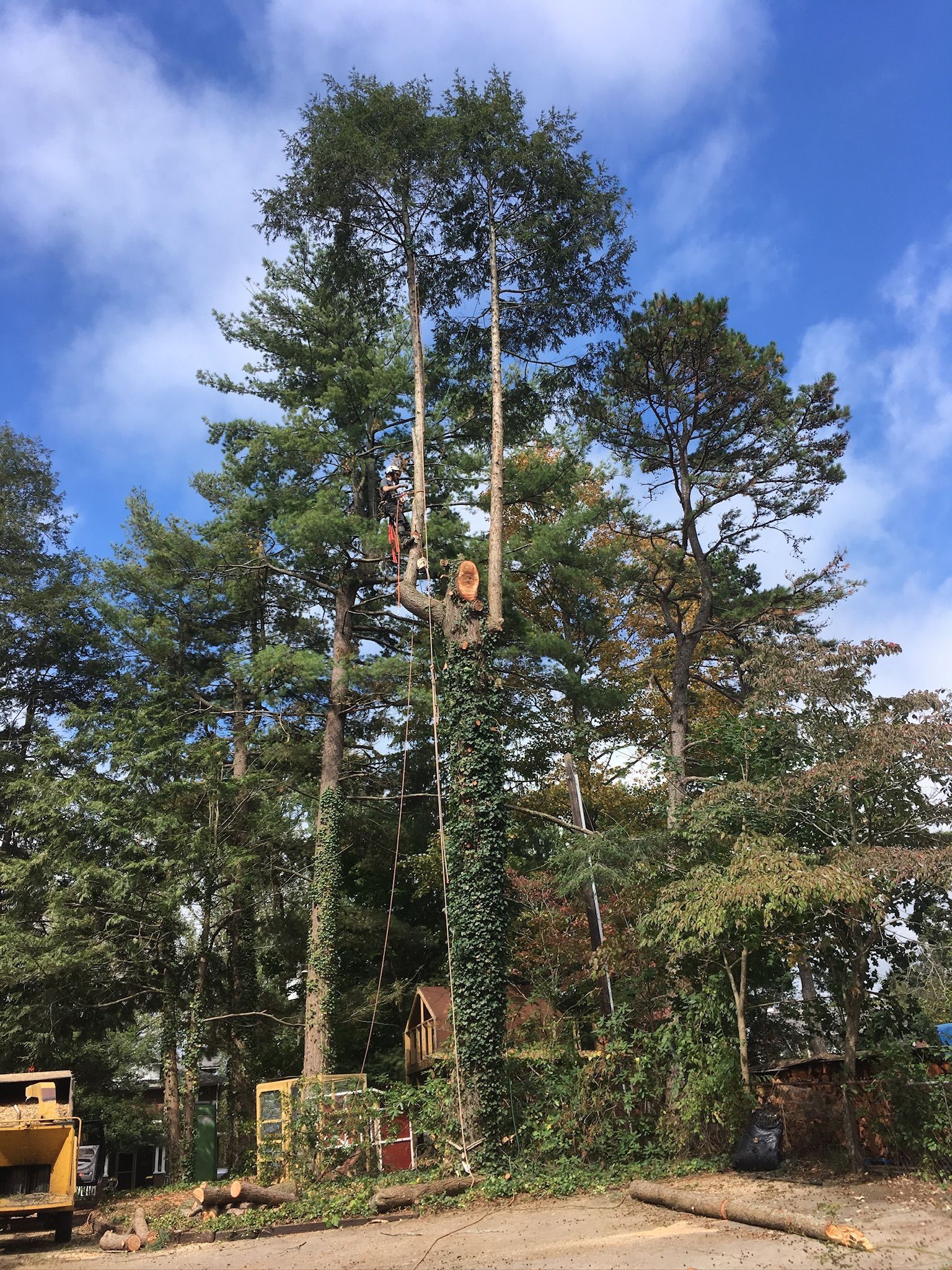
If a tree has significant deadwood, storm damage, or large limbs over a structure, professional equipment and trained crews can reduce the risk of injury and property damage. For immediate hazards, use emergency tree services .
When should Asheville homeowners schedule winter pruning?
Late fall and winter scheduling can work well when the tree is dormant, the weather is suitable, and the ground is stable enough for safe access. Avoid pruning during extreme cold, severe wind, saturated soil, or icy conditions. Fresh cuts and equipment work should be planned around safety rather than a fixed date.
Homeowners in Asheville, Fairview, and Arden can begin by looking for:
- Dead branches or limbs hanging over frequently used areas
- Branches touching roofs, siding, or vehicles
- Crowded or rubbing branches
- A tree that has changed shape after a storm
- Growth that blocks visibility or interferes with access
A seasonal inspection can also identify issues before spring foliage hides the structure again. Arborsmiths of Asheville serves residential and commercial properties across Western North Carolina with a focus on tree safety, preservation, and long-term vitality.
Winter tree pruning: key takeaways
Late fall and winter can be a smart time to prune many deciduous trees in Western North Carolina, but the right approach depends on species, condition, structure, and pruning goals. Dormancy may reduce stress, while bare branches give an arborist a clearer view of hazards and natural form. The objective is selective pruning that supports healthy spring growth—not excessive removal or artificial shaping. If you own mature trees in Asheville, Fairview, or Arden, inspect them before spring leaf-out and schedule an evaluation when concerns arise. Contact Arborsmiths of Asheville at (828) 519-5577 to discuss safe, tree-specific pruning.
Recent Posts