How to Plant Trees in Fall in Asheville
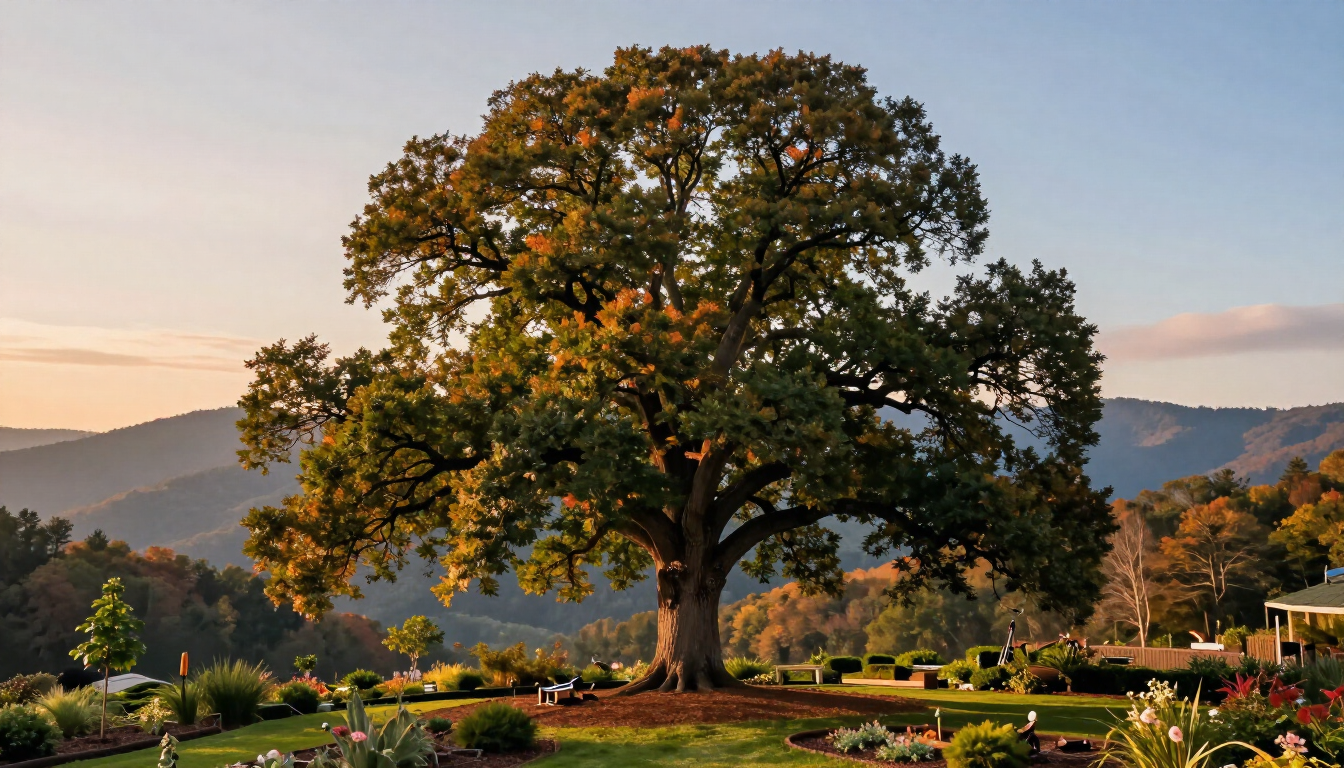
Fall is the best time for tree planting in Asheville and Western North Carolina because cool air reduces stress while warm soil encourages root growth. Trees planted in autumn can establish their root systems before spring growth, giving them a stronger start through summer heat and drought.
Why is fall the best time to plant trees in Asheville?
Fall offers a combination of conditions that benefit newly planted trees. In Asheville, Weaverville, Black Mountain, Hendersonville, and surrounding communities, temperatures typically become more moderate after summer while the ground remains warm enough for root development.
The tree may appear dormant above ground, but its roots can continue growing until the soil becomes consistently cold. This gives the tree time to begin anchoring itself and absorbing moisture before the demands of spring leaves and summer heat arrive.
Key benefits of fall tree planting include:
- Cooler air reduces transplant shock and moisture loss.
- Warm soil supports root establishment.
- Seasonal rainfall can reduce watering demands.
- Fewer insects and disease pressures may affect the tree.
- Roots have time to develop before summer stress.
Spring planting can also work, but spring weather often changes quickly. A newly planted tree may need to produce leaves and roots at the same time, followed by Asheville’s warm, sometimes dry summer. Fall planting gives the root system a valuable head start.
How do cool air and warm soil help roots establish?
A tree loses less water through its leaves when temperatures are cooler. That matters after transplanting because roots have been disturbed and may not yet supply moisture efficiently. Lower evaporation helps the tree maintain balance while it adjusts to its new location.
At the same time, soil temperatures remain warmer than the air for much of fall. This allows fine feeder roots to grow even as branches slow their growth. These small roots are essential because they absorb water and nutrients from the surrounding soil.
The result is a useful seasonal advantage: less stress above ground and continued development below ground. By spring, a properly planted tree may be better positioned to support new foliage and withstand periods of heat.
Timing still matters. Plant after the worst summer heat has passed, but allow several weeks for roots to establish before the ground freezes. In Western North Carolina, local conditions vary by elevation, exposure, and soil type, so a professional evaluation can help determine the best planting window.
Choosing the right tree for the right spot
A healthy tree begins with a suitable location. Before choosing a species, evaluate the site’s sunlight, drainage, mature space, soil, and proximity to buildings or utilities. The best tree for a yard is not simply the fastest-growing or most attractive option; it is one that can thrive in that specific setting.
Consider these questions:
- How much direct sunlight does the planting area receive?
- Does water drain away, or does the soil stay saturated?
- How large will the tree become at maturity?
- Are overhead wires, septic systems, sidewalks, or foundations nearby?
- Can the site support regular watering during the first year?
Native and well-adapted trees are often strong choices for Asheville-area landscapes, but the right selection depends on the property. A tree suited to an open, sunny yard may struggle in a shaded woodland edge. Likewise, a species that tolerates wet soil may perform poorly on a dry slope.
Homeowners in Weaverville may encounter different soil and exposure conditions than homeowners in Hendersonville or Black Mountain. Elevation and neighborhood microclimates also influence winter temperatures, wind, and moisture. Choosing with those factors in mind improves long-term growth and reduces future maintenance problems.
For professional guidance, explore our tree planting and transplanting services . A site assessment can help match the tree to the property before you purchase and plant it.
What is the proper way to plant a tree?
Good planting technique is as important as the planting date. A tree can fail even in excellent soil if it is planted too deeply, watered inconsistently, or surrounded by competing turf and weeds.
1. Prepare a wide planting area
Dig a hole two to three times wider than the root ball, but no deeper than the root ball’s height. Loosened soil around the sides gives new roots room to expand. Avoid creating a deep, narrow hole that encourages the tree to settle below the correct grade.
2. Find the root flare
The root flare is where the trunk begins to widen and transition into major roots. It should sit at or slightly above the surrounding soil level. Never bury the trunk flare beneath several inches of soil or mulch. Deep planting can limit oxygen, encourage decay, and gradually suffocate the root system.
If the flare is hidden by excess nursery soil, carefully remove enough material to locate it before positioning the tree. The final soil level should allow the flare to remain visible.
3. Set the tree straight
Place the tree in the hole and view it from multiple directions. Make sure the strongest or most attractive side faces the area where it will be seen, while the trunk remains upright. Turn the root ball before backfilling rather than forcing the trunk straight after the soil is packed.
4. Backfill with native soil
Use the soil removed from the hole unless it is severely contaminated or unsuitable. Avoid filling the hole with rich amendments that create a sharp boundary between amended and native soil. That boundary can restrict root movement and hold excess water.
Gently firm the soil to eliminate large air pockets, but do not compact it heavily. Build a shallow soil ring around the edge of the planting area to direct water toward the root ball during the establishment period.
5. Add mulch correctly
Apply a two- to three-inch layer of organic mulch over the planting area, keeping it several inches away from the trunk. Mulch helps conserve moisture, moderate soil temperature, and reduce competition from grass. Do not create a volcano-shaped mound against the bark.
How deeply should a new tree be planted?
Plant the tree no deeper than it grew in the nursery container or field. The root flare should be visible above the soil surface. When in doubt, planting slightly high is generally safer than planting too deep, especially in heavy or poorly drained soil.
Before filling the hole, inspect the root ball for circling roots. If roots are tightly circling the perimeter, loosen or correct them as appropriate. Do not aggressively disturb a fragile root ball, but do address major defects that could eventually constrict the trunk or limit outward growth.
Avoid staking unless the tree cannot remain upright on its own or the site experiences strong, persistent wind. If staking is necessary, use flexible ties and remove them after the tree develops adequate stability.
How often should you water a newly planted tree?
Water thoroughly immediately after planting, allowing moisture to reach the full root ball and surrounding soil. During the first year, check the soil regularly rather than relying only on a fixed schedule.
A practical approach is to water deeply when the upper few inches of soil begin to dry. The exact amount depends on tree size, soil, rainfall, slope, and temperature. Sandy or exposed sites may require more frequent irrigation, while clay soils may need slower application and longer intervals.
Use these first-year watering guidelines:
- Check moisture two or three times each week during dry weather.
- Water slowly so it infiltrates instead of running off.
- Pay close attention during late spring and summer heat.
- Continue monitoring during fall and winter dry spells.
- Reduce watering after substantial rainfall, but do not assume one storm fully hydrates the root zone.
Overwatering can be as harmful as underwatering. Constantly saturated soil reduces oxygen around roots and can contribute to decline. Drip irrigation, a soaker hose, or a slow hose trickle can provide more consistent moisture than a brief spray.
In the first year, protect the tree from lawn equipment, deer browsing, and damage from string trimmers. Keep competing grass away from the trunk and inspect the tree after heavy wind or storms.
Common fall planting mistakes
Avoid these problems when establishing a new tree:
- Planting below the root flare
- Choosing a tree that will outgrow the site
- Placing mulch directly against the trunk
- Watering only the leaves instead of the root zone
- Stopping irrigation as soon as winter arrives
If a tree shows wilting, leaf scorch, cracking soil, standing water, or unusual dieback, seek advice early. Our tree health care experts can help identify stress before a manageable issue becomes a serious decline.
When should you call a tree professional?
Professional help is worthwhile when a planting site has compacted soil, drainage problems, steep slopes, utility conflicts, mature trees nearby, or a history of failed plantings. An experienced arborist can assess the site, recommend suitable species, and create a plan for establishment and long-term care.
Arborsmiths of Asheville serves homeowners throughout Asheville and Western North Carolina, including Weaverville, Black Mountain, and Hendersonville. With more than 25 years of experience, the team focuses on tree health, safety, and preservation rather than short-term installation alone.
For related planning, you can also review our tree risk assessment services when planting near existing trees, structures, or high-use areas.
Fall tree planting: the practical takeaway
Fall is an excellent time to plant trees in Asheville and Western North Carolina because cooler air limits stress while warm soil supports root growth. Choose a species that fits the site, keep the root flare visible, plant no deeper than the root ball, and provide consistent moisture through the first year. These steps help a new tree establish before spring growth and summer heat. If you are planning a planting in Asheville, Weaverville, Black Mountain, Hendersonville, or nearby communities, contact Arborsmiths of Asheville at (828) 519-5577 for practical guidance and professional tree planting support.
Recent Posts